
Faculty by Classification
Core Faculty
These faculty have primary appointments in the Department of Chemistry.

Barnett, Brandon R.
Assistant Professor of Chemistry
- Office Location
- 471 Hutchison Hall
- Telephone
- (585) 275-8286
- Web Address
- Website
Interests: Organometallic chemistry; Porous materials; Molecular separations; Catalysis

Bren, Kara L.
she/her/hers
Richard S. Eisenberg Professor in Chemistry in the School of Arts & Sciences
Professor of Chemistry
Chair, Department of Chemistry
- Office Location
- 448 Hutchison Hall
- Telephone
- (585) 275-4335
- Web Address
- Website
Interests: Bioinorganic and biophysical chemistry

Dinnocenzo, Joseph P.
Professor of Chemistry
- Office Location
- 463 Hutchison Hall
- Telephone
- (585) 275-8351
Interests: Mechanistic and physical organic chemistry

Franco, Ignacio
he/him/his
Associate Professor of Chemistry
Associate Professor of Physics
Leonard Mandel Faculty Fellow
- Office Location
- 454 Hutchison Hall
- Telephone
- (585) 275-8209
- Web Address
- Website
Interests: Physical and Theoretical Chemistry

Frontier, Alison J.
she/her/hers
Professor of Chemistry
- Office Location
- 414 Hutchison Hall
- Telephone
- (585) 275-2568
- Web Address
- Website
Interests: Synthetic organic chemistry; synthesis of bioactive natural products; pericyclic reactions; asymmetric catalysis; cationic cascades

Huo, Pengfei
Associate Professor of Chemistry
Associate Professor of Optics
- Office Location
- 456 Hutchison Hall
- Telephone
- (585) 276-7793
- Web Address
- Website
Interests: Theoretical Chemistry; Quantum Dynamics; Quantum Optics; Cavity QED; Light-Matter Interactions; Polariton Chemistry

Jiang, Yishu
she/her/hers
Incoming Assistant Professor in July 2024
- Office Location
- 574A Tan Hall, Department of Chemistry, University of California, Berkeley
- Web Address
- Website
Interests: Biophysical chemistry; Catalysis; Ultrafast spectroscopy and cell imaging

Jones, William D.
he/him/his
Charles Frederick Houghton Professor of Chemistry
Professor of Chemistry
- Office Location
- B26 Hutchison Hall
- Telephone
- (585) 275-5493
- Web Address
- Website
Interests: Mechanistic Inorganic Chemistry and Catalysis

Kennedy, C. Rose
she/her/hers
Assistant Professor of Chemistry
- Office Location
- 459 Hutchison Hall
- Telephone
- (585) 275-8778
- Web Address
- Website
Interests: Catalysis and Synthetic Methods; Organometallic Chemistry; Mechanistic and Physical Organic Chemistry

Knowles, Kathryn
she/her/hers
Associate Professor of Chemistry
- Office Location
- 457 Hutchison Hall
- Telephone
- (585) 275-0649
- Web Address
- Website
Interests: Inorganic Materials Chemistry

Krauss, Todd D.
he/him/his
Jay Last Professor in Arts, Sciences & Engineering
Professor of Chemistry
Professor of Optics
- Office Location
- 465 Hutchison Hall
- Telephone
- (585) 275-5093
- Web Address
- Website
Interests: Materials Chemistry and Physics of Colloidal Nanoscale Semiconductors; Optics of nanoscale semiconductor materials; Quantum optics and nanoscience

Matson, Ellen
she/her/hers
Marshall D. Gates, Jr. Professor of Chemistry
Associate Professor of Chemistry
- Office Location
- B45 Hutchison Hall
- Telephone
- (585) 276-7792
- Web Address
- Website
Interests: Inorganic and Materials Chemistry

McCamant, David W.
he/him/his
Associate Professor of Chemistry
- Office Location
- B30 Hutchison Hall
- Telephone
- (585) 276-3122
- Web Address
- Website
Interests: Ultrafast spectroscopy of molecular dynamics in photochemistry; mechanisms of vibrational relaxation

Nilsson, Bradley L.
he/him/his
Professor of Chemistry
Director, Materials Science Program
- Office Location
- 417 Hutchison Hall
- Telephone
- (585) 276-3053
- Web Address
- Website
Interests: Peptide self-assembly; amyloid peptides; amyloid-inspired materials; bioorganic chemistry; supramolecular chemistry

Paradine, Shauna
she/her | they/them
Assistant Professor of Chemistry
- Office Location
- 453 Hutchison Hall
- Telephone
- (585) 276-5822
- Web Address
- Website
Interests: Organic Chemistry and Organometallic Chemistry

Partridge, Benjamin E.
he/him/his
Assistant Professor of Chemistry
- Office Location
- 419 Hutchison Hall
- Telephone
- (585) 273-1404
- Web Address
- Website
Interests: Supramolecular chemistry; Bioinspired materials; Self-assembly in water; Protein engineering

Rothberg, Lewis
he/him/his
Professor of Chemistry
Professor of Chemical Engineering
- Office Location
- 462 Hutchison Hall
- Web Address
- Website
Interests: Polymer electronics; optoelectronic devices; light-emitting diodes; thin-film transistors; photodetectors; xerographic photoreceptors; biological sensors; electrooptic modulators

Ruggiero, Michael T.
he/him/his
Associate Professor of Chemistry
Associate Professor of Chemical Engineering
- Office Location
- 451 Hutchison Hall
- Web Address
- Website
Interests: Physical and materials chemistry; Ultrafast terahertz vibrational spectroscopy and optics; Theoretical chemistry; Diffraction and crystallography

Schröder, Wolf-Udo
Professor of Chemistry
Professor of Physics
- Office Location
- 466 Hutchison Hall
- Telephone
- (585) 275-8263
- Web Address
- Website
Interests: Dynamics of Complex Nuclear Reactions at intermediate and high energies

Thorarinsdottir, Agnes E.
she/her/hers
Assistant Professor of Chemistry
- Office Location
- B32 Hutchison Hall
- Web Address
- Website
Interests: Inorganic chemistry; Materials chemistry; Electrochemistry; Stimuli-responsive molecules and materials; Catalysis; Clean energy
Cluster Affiliated Faculty
Faculty in the clusters have primary appointments in other departments but can mentor chemistry graduate students.
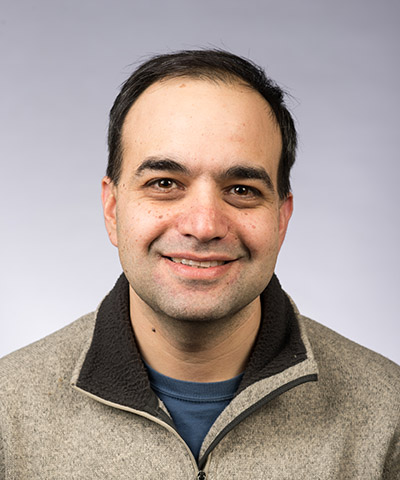
Ghaemmaghami, Sina
Mercer Brugler Distinguished Teaching Professor
George Y. and Catherine H. Wu Professor in Chemistry
Professor of Biology
Director, AS&E Undergraduate Research
Research Active
Now accepting:
PhD students
Please email with inquiries.
- Office Location
- 326A Hutchison
- Telephone
- (585) 275-4829
- Web Address
- Website
Interests: Protein folding and degradation; Neurodegenerative diseases and aging; Prion biology; Proteomics

Grossfield, Alan
he/him/his
Associate Professor of Biochemistry and Biophysics
- Telephone
- (585) 276-4193
- Web Address
- Website
Interests: Investigating membranes and membrane proteins via computer simulation

Mathews, David H.
Lynne E. Maquat Distinguished Professor
Professor of Biochemistry and Biophysics
- Telephone
- (585) 275-1734
- Web Address
- Website
Interests: Computational biology of RNA, including structure prediction, molecular dynamics, and genomics

Miller, Benjamin L.
Professor of Dermatology
Professor of Biomedical Engineering
Professor of Biochemistry and Biophysics
Professor of the Institute for Optics
- Office Location
- 5-6141A MC
- Telephone
- (585) 275-9805
- Web Address
- Website
Interests: Developing new strategies for the sequence-selective recognition of RNA, and using the optical properties of nanostructured materials for the production of novel biosensors

Müller, Astrid M.
she/her/hers
Assistant Professor of Chemical Engineering
- Office Location
- 4509 Wegmans Hall
- Telephone
- (585) 276-7331
- Web Address
- Website
Interests: Interests: Developing new multimetallic nanomaterials for sustainable energy, green chemistry, and biomedical applications, and understanding what materials properties drive functionality

Porosoff, Marc D.
Assistant Professor of Chemical Engineering
- Office Location
- 4305 Wegmans Hall
- Telephone
- (585) 276-7401
- Web Address
- Website
Interests: CO2 Reduction; Heterogeneous Catalysis; Catalyst Structure-Property Relationships; C1 Chemistry; Upgrading Light Alkanes

Shestopalov, Alexander
he/him/his
Associate Professor of Chemical Engineering
Scientist, Laboratory for Laser Energetics
- Office Location
- 4507 Wegmans Hall
- Telephone
- (585) 276-5434
- Web Address
- Website
Interests: Surface Chemistry; Organic Chemistry; Surface Patterning; Nanostructured Materials; Interfacial Thermodynamics

White, Andrew
he/him/his
Assistant Professor of Chemical Engineering
- Office Location
- 4001 Wegmans Hall
- Telephone
- (585) 276-7395
- Web Address
- Website
Instructional Faculty

Hafensteiner, Benjamin
Faculty Lecturer
- Office Location
- 124 Hutchison Hall
- Telephone
- (585) 275-1936
Interests: Chemical education; total synthesis of natural products; organic synthesis; reaction invention and investigation; cascade reactions

Olsen, John-Carl
he/him/his
Assistant Professor of Teaching
- Office Location
- 112-B Hutchison Hall
- Telephone
- (585) 273-4857
Interests: Chemical education; topologically non-trivial molecules and metal-ligand assemblies; nanoparticles for drug delivery; total synthesis

Stanford, Courtney
Assistant Professor of Teaching
- Office Location
- 112A Hutchison Hall
- Telephone
- (585) 273-4988
Interests: Chemistry Education, Lab Development, Active Learning Pedagogy
Research Professors
Research professors do not accept graduate students, but have active research programs within the department.

Ebetino, Frank Hal
Professor of Chemistry, Research
- Telephone
- (513) 532-4084
- Web Address
- Website
Interests: Medicinal chemistry and drug design, including bisphosphonates and bone targeted drugs for arthritis and cancer, receptor agonists/antagonists, and epigenetic enzyme inhibitors

Farid, Samir
Professor of Chemistry, Research
- Office Location
- 220E Hutchison Hall
- Telephone
- (585) 275-8398
Interests: Photo-induced Electron Transfer Reactions

Mort, Brendan
Assistant Professor of Chemistry, Research
Director of the Center for Integrated Research and Computing
- Office Location
- 418 Hutchison Hall
- Telephone
- (585) 275-8289
Interests: High performance computing; application of computing technology to chemistry and biology; computational chemistry algorithm development; molecular dynamics simulations, electronic structure theory
Adjunct Faculty
Adjunct faculty do not accept new graduate students and now have appointments elsewhere, although some of their students are still based at the University of Rochester.

Fasan, Rudi
he/him/his
Andrew S. Kende Professor in Synthetic Organic Chemistry
Professor of Chemistry
- Office Location
- 418 Hutchison Hall
- Telephone
- (585) 273-3504
- Web Address
- Website
Interests: Organic chemistry and chemoenzymatic synthesis; asymmetric biocatalysis; protein engineering; bioorganic chemistry and chemical biology

Neidig, Michael L.
he/him/his
Marshall D. Gates, Jr. Professor of Chemistry
- Office Location
- B32 Hutchison Hall
- Telephone
- (585) 276-6006
- Web Address
- Website
Interests: Synthetic and Mechanistic Organometallic Chemistry, Catalysis and f-Element Chemistry
Emeritus Faculty
Emeritus faculty no longer teach courses or graduate students, but many are still active contributors to the intellectual life of the department, serving as co-advisors, mentors, and running research programs.

Eisenberg, Richard
Tracy H. Harris Professor of Chemistry, Emeritus
- Telephone
- (585) 733-2914
Interests: Synthesis, structure, reaction chemistry and applications of inorganic and organometallic systems; metal complex photochemistry; molecular, semiconductor and hybrid systems for light-to-chemical energy conversion; parahydrogen induced polarization; sustainability and the hydrogen economy.

Farrar, James M.
Professor Emeritus of Chemistry
- Office Location
- B19 Hutchison Hall
- Telephone
- (585) 275-5834
- Web Address
- Website
Interests: Dynamical studies of low energy ion-molecule reactions in the gas phase; imaging studies of collisions; photochemistry of size-selected ionic clusters

Kreilick, Robert W.
Professor Emeritus of Chemistry
- Telephone
- (585) 275-4231
Interests: Magnetic and Electrical Properties of Solids: Rapid Motion in Solids, Structure of Solids, Energy Transfer in Solids

Krugh, Thomas R.
Professor Emeritus of Chemistry
- Telephone
- (585) 275-4231
Interests: Biophysical chemistry; structural analysis of biomolecules, energy minimization and molecular dynamics calculations

Muenter, John S.
Professor Emeritus of Chemistry
- Telephone
- (585) 275-4231
Interests: Spectroscopic Studies of Molecular Properties and Dynamics
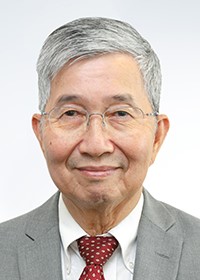
Tang, Ching W.
Emeritus Professor of Chemical Engineering
- Office Location
- 4003 Wegmans Hall
- Telephone
- (585) 275-3552
Interests: Organic Electronics; Thin-Film Devices; Display Technology; Organic Light Emitting Diodes; Organic Solar Cells; II-VI Semiconductors; CdTe Solar Cells; Thin-Film Deposition & Characterization

Turner, Douglas H.
Professor Emeritus of Chemistry
- Office Location
- B08 Hutchison Hall
- Telephone
- (585) 275-3207
Interests: Biophysical chemistry: nucleic acid structure and function, RNA folding, therapeutics, and prediction of structure from sequence